Product Introduction
Grounding devices play an increasingly important role in national production and daily life, ensuring the normal operation of electronic and electrical equipment and personal safety. Higher requirements are being placed on the safety, reliability, and stability of grounding devices, primarily depending on the corrosion resistance of the grounding materials. In recent years, with the development of technology and production equipment, new grounding materials such as stainless steel, pure copper, copper-clad steel, and zinc-clad steel have gradually replaced traditional galvanized materials. Stainless steel is already specified as a grounding material in international standards such as ASTM, UL, and IEC, and domestic standards such as DL/T248-2012.
The most common grounding material is 304 stainless steel. Due to its special chemical composition and metallographic structure, a protective film easily forms on its surface. It has good corrosion resistance to alkaline solutions and most organic and inorganic acids. Furthermore, it exhibits high corrosion resistance even at high temperatures of 800 degrees Celsius.
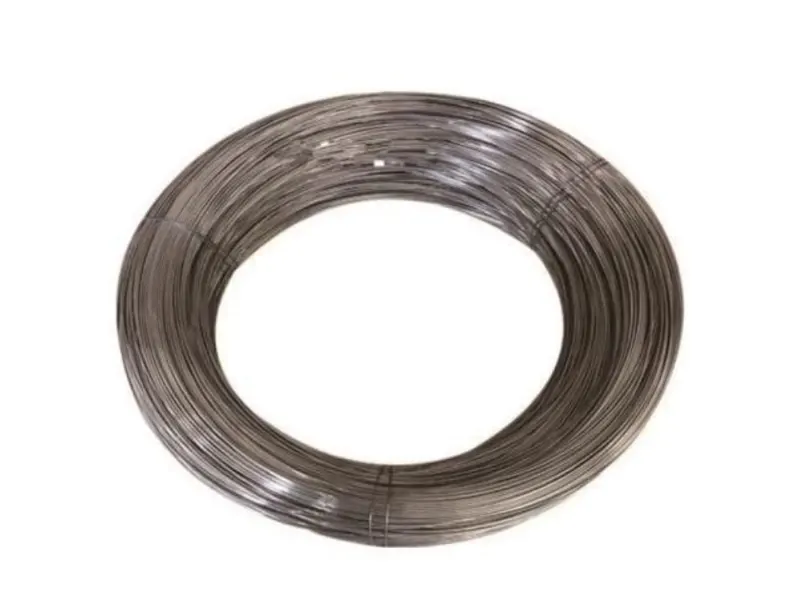
Although stainless steel has excellent corrosion resistance, its conductivity is slightly inferior to that of low-carbon steel. To improve its conductivity, our company has developed a composite material that is both corrosion-resistant and has better conductivity than stainless steel. This involves tightly bonding highly corrosion-resistant stainless steel to a low-carbon steel core. High-conductivity stainless steel composite grounding wires exhibit good conductivity, quickly dissipating current and balancing voltage; they also have good thermal stability, withstanding fault current surges without undergoing physical changes that could lead to material melting or a significant reduction in mechanical strength; and they offer superior corrosion resistance, preventing mass reduction due to corrosion that could reduce cross-sectional area and thus affect the material's thermal stability. The main process flow includes: low-carbon steel core straightening - degreasing - rust removal - polishing - coating - lamination - inspection - packaging - warehousing.
Main Technical Parameters
1. The cladding material conforms to the chemical composition and physical properties specified in GB/T20878 and GB/T12771.
2. The steel core material conforms to the chemical composition and physical properties specified in GB/T699.
3. Tensile Strength
3.1 Stainless Steel Composite Grounding Round Wire: 300-450 N/mm²
3.2 Stainless Steel Composite Grounding Electrode: 550 N/mm²
4. Corrosion Resistance
4.1 In corrosive environments of strongly acidic, strongly alkaline, and saline soils, its annual average corrosion rate is not greater than 0.01 mm/a.
5. Clad Layer Plasticity
5.1 After the composite material is bent at 90 degrees (bending radius not less than 10 times the diameter), there are no cracks in the bending area of the cladding layer.
6. Bonding Force Between the Sheath and the Core Rod
6.1 When the bonding length between the sheath and the core rod is 150mm, the bonding force shall not be less than 15KN.
7. The relative conductivity of the stainless steel composite grounding material shall not be less than 10.0% IACS.
| Specifications and Models | Outer Diameter (mm) |
Clad Layer Thickness (mm) |
Supply Length (m) |
Reference Weight (kg/m) |
| -1006 | 10±0.35 | 0.50~0.70 | 100 or 6-9 | 0.62 |
| -1206 | 12±0.35 | 0.50~0.70 | 100 or 6-9 | 0.89 |
| -1406 | 14±0.35 | 0.50~0.70 | 100 or 6-9 | 1.21 |
| -1606 | 16±0.35 | 0.50~0.70 | 100 or 6-9 | 1.58 |
| -1807 | 18±0.35 | 0.50~0.70 | 100 or 6-9 | 2.01 |
| -2006 | 20±0.35 | 0.50~0.70 | 100 or 6-9 | 2.48 |